


Xero can send a customer statement, but only by hand, one run at a time: Contacts, then Customers, tick the customers, Email, pick Outstanding or Activity, Send. Xero has no setting that repeats a statement run on a schedule. To send statements automatically from Xero you connect an app such as Paidnice, which runs a statement policy weekly or monthly.
Statements go out because invoices sit unpaid. Xero Small Business Insights measures how often that happens.
| Country | Paid late | Year on year |
|---|---|---|
| Australia | 4.3% | -2.7 pts |
| New Zealand | 5.1% | -0.5 pts |
| UK | 8.3% | -0.9 pts |
| US | 8.3% | -0.1 pts |
| Canada | 11.4% | +0.8 pts |
Source: Xero Small Business Insights, June 2026. See the full data on the Paidnice accounts receivable statistics dashboard.
The statement is the summary of that share, sent on a cycle.
You send a Xero customer statement by hand from the Contacts screen: pick the customers, choose Outstanding or Activity, set the date, then Email. Xero repeats none of it next month.
There is no step six. Nothing in Xero remembers that you did this, and nothing brings it back next month.
Xero has no scheduling for customer statements: the Send statements screen runs once, when a person opens it, and there is no setting to repeat it, filter to customers who owe you, target a customer group, or skip weekends. Those all sit in the follow-up layer, which Xero leaves to connected apps.
The request to auto-email statements is the largest open idea in this part of Xero's product ideas board. It was posted on 13 November 2015, holds 1,172 votes and sits at "In discovery". Xero's most recent reply, from community manager Kelly Munro on 5 August 2026, says discovery is continuing and asks the thread to fill in a feedback form. The idea has been open for more than ten years with no shipped feature, so the practical route today is an app rather than a wait.
We see the pattern from the other side. Across the Paidnice statement policies running on Xero today, the most common setup is monthly, sent only to contacts with an outstanding balance, with a short exclusion list for customers on a payment plan. Almost nobody wants to send every customer a statement every month, which is exactly the all-or-nothing behavior Xero's manual batch forces.
Xero can produce statements, but it cannot send them on a schedule. Everything below the line is manual, every single month.
A Paidnice statement policy is set up in four steps: connect Xero, create an Auto-Statement policy, choose the schedule and audience, then turn off Safe Mode. Setup takes a few minutes and the policy runs every cycle from then on.
The first step is to sync your Xero account with Paidnice. This allows Paidnice to access your Xero data and automatically generate statements.
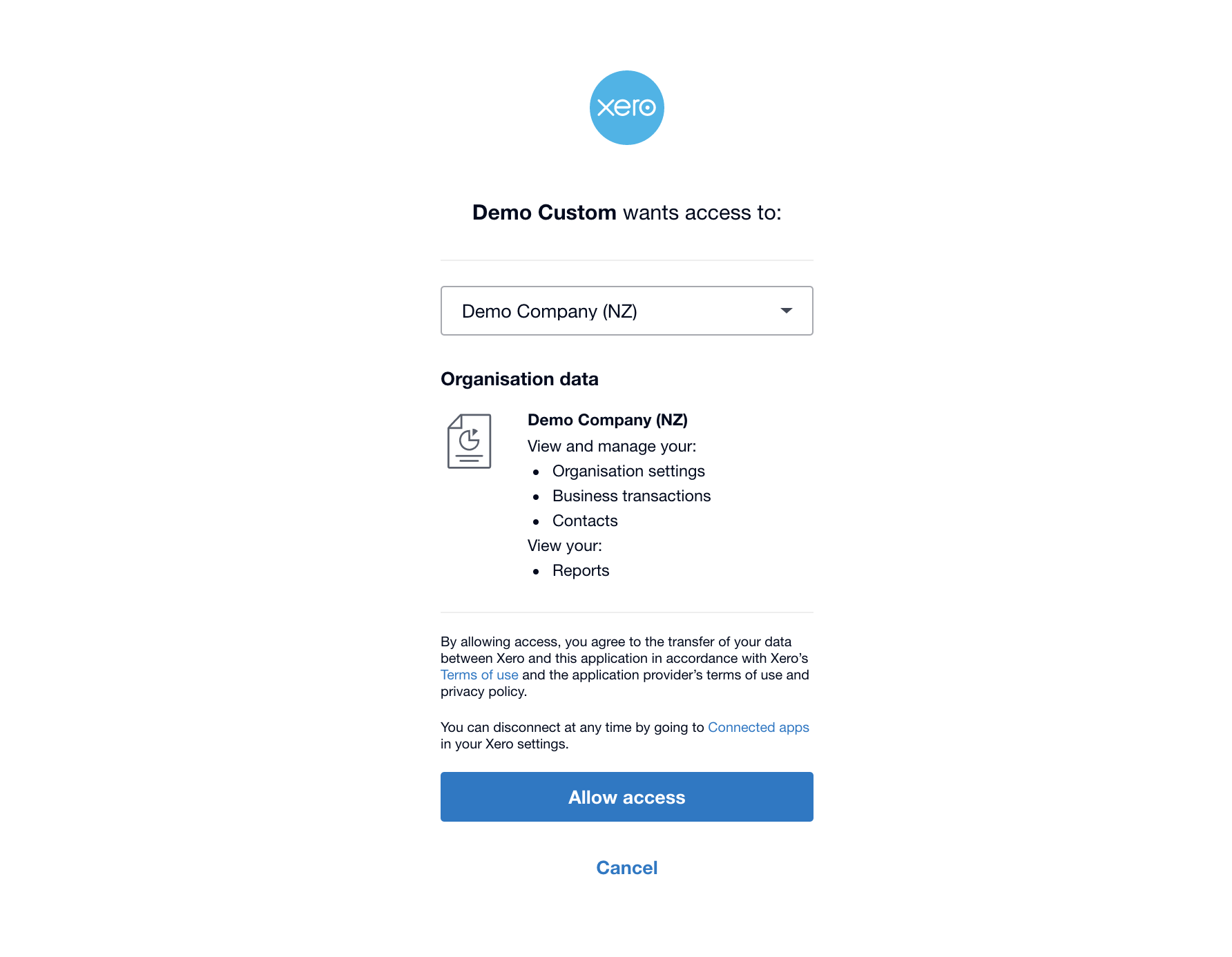
To connect them:
Now that Paidnice is connected to Xero, you can start setting up your automated statement policies.
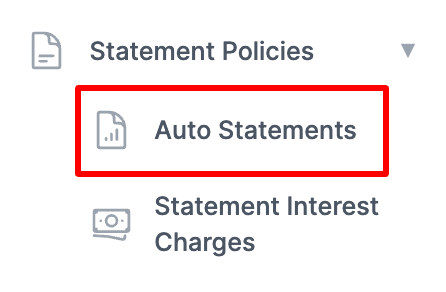
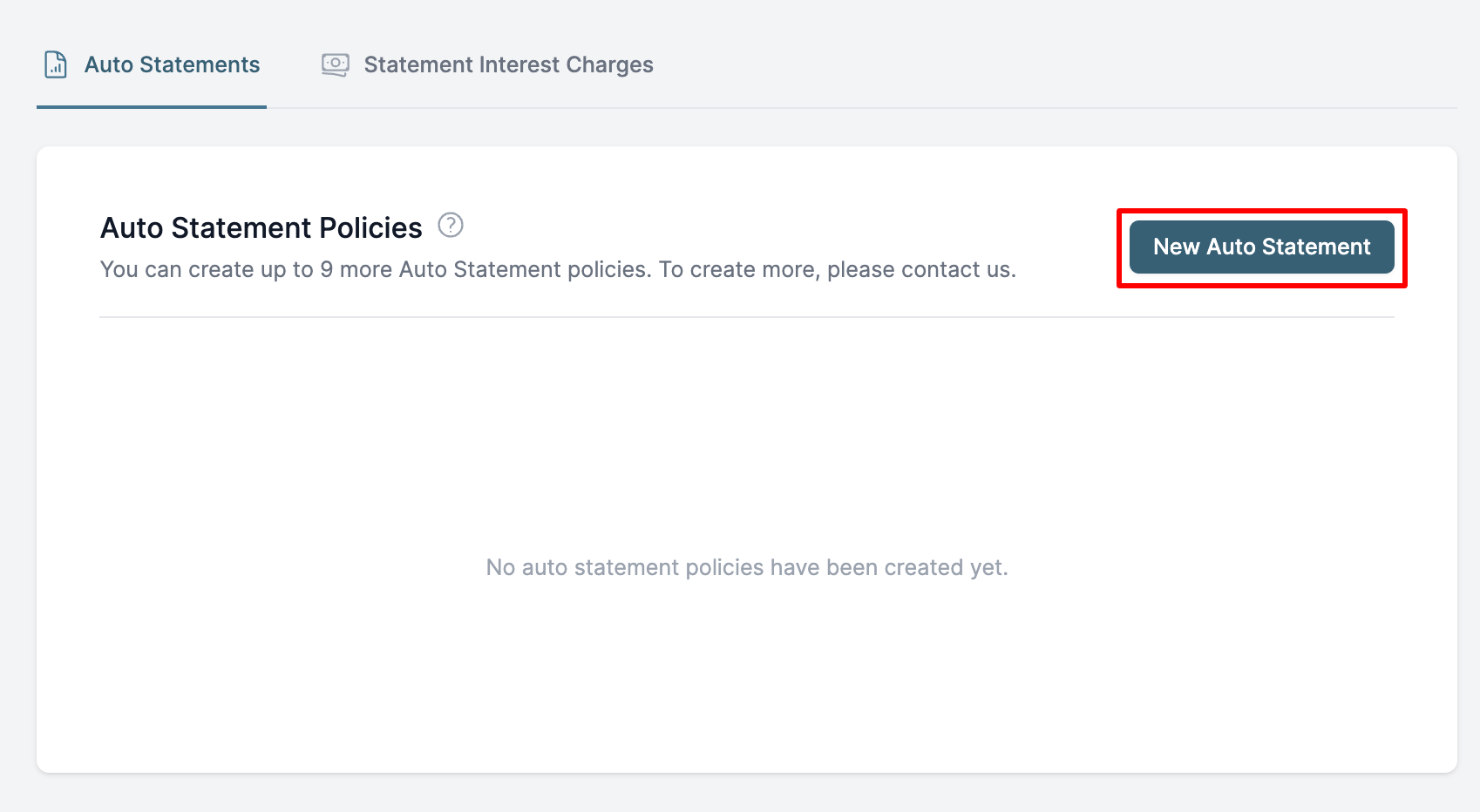
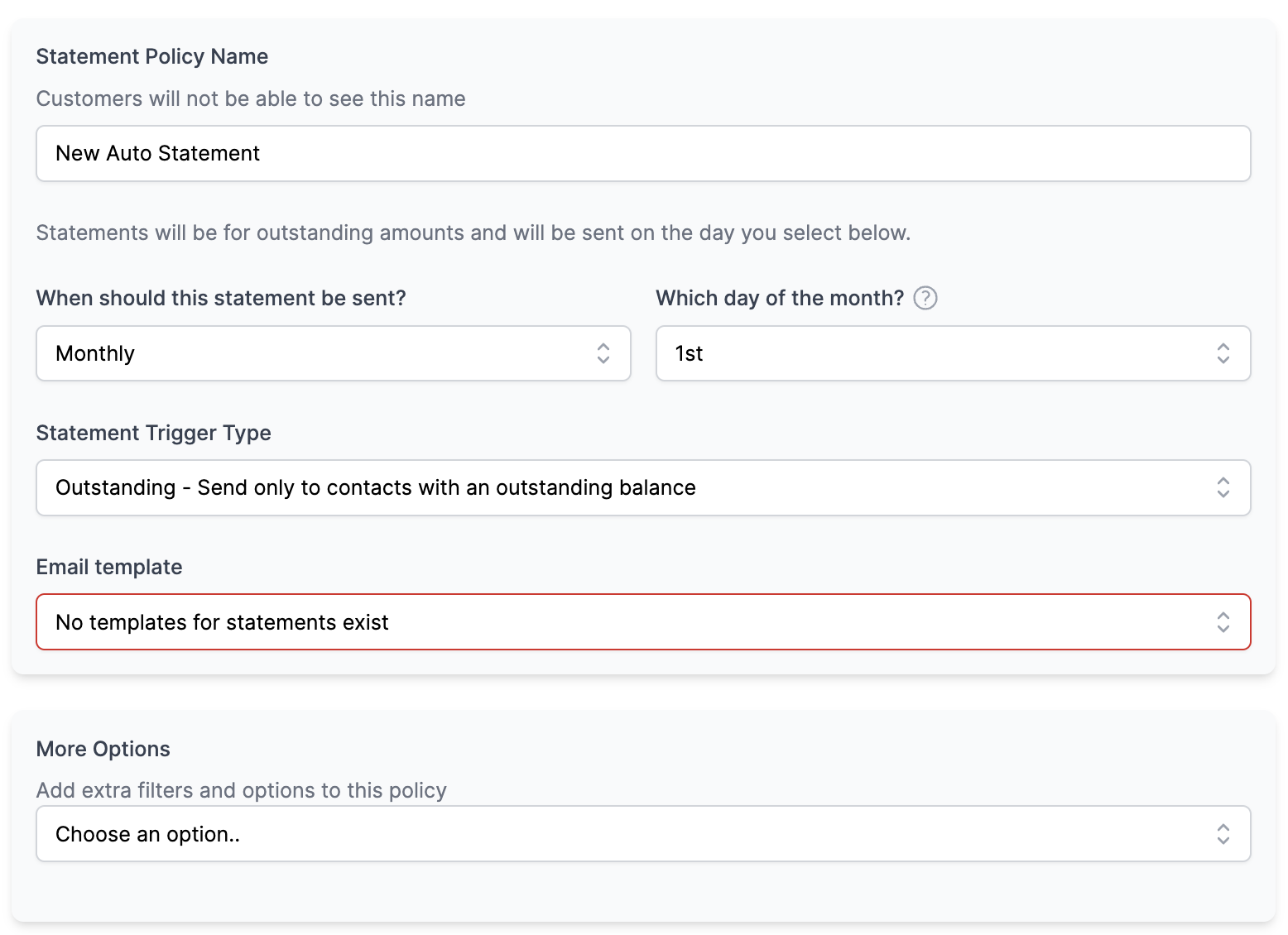
When creating the auto-statement policy, you can customize:
Once you finish setting up the policy, save it and go live by turning off "Safe Mode" in Paidnice.
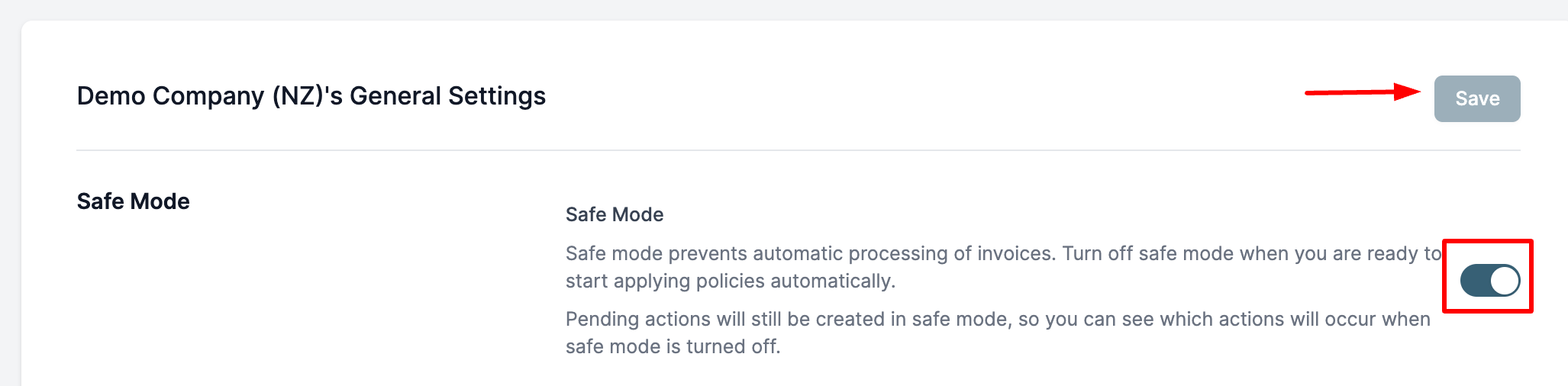
Now statements will start being automatically generated and emailed based on your policy schedule and rules.
A Paidnice statement policy controls the schedule (weekly, monthly, or monthly on weekdays only), the send day and time, the audience (contacts with an outstanding or overdue balance, a group or a tag), a minimum balance, named exclusions, and which PDFs to attach: the Outstanding statement, the Activity statement, or both.
Monthly (Weekdays) shifts a send that lands on a Saturday or Sunday to the next weekday, so a statement dated the 1st never arrives on a weekend. Paidnice starts at US$69, £49, AU$99 or NZ$109 (ex GST) a month for 150 invoices, and statement policies work the same on QuickBooks Online.
Pick a schedule, choose who receives statements, and exclude anyone you do not want to include. Paidnice does the rest automatically.
Excluded contacts never receive an automatic statement, even if they have a balance.
Paidnice sends one consolidated statement to a parent company by grouping its child entities under a nominated parent: the statement lists every open invoice across every child, with one total, and goes to the parent's accounts payable address. Xero contacts stay as they are. The full setup is in parent-child customers in Xero.
Bill a parent company that owns several entities? Put the related companies into one group, nominate the parent, and Paidnice sends a single statement covering all of them, instead of one per company.
Paidnice adds interest to an overdue statement through a Statement Interest Charge: a policy that charges interest per customer against the whole overdue balance, monthly on a chosen day, and recalculates the figure at the moment the statement is sent, so the amount the customer opens is correct that morning. The rate can be a percentage per annum prorated daily, or a percentage of the balance at issue time, and UK users can follow the Bank of England base rate plus their own percentage. Statement interest is on the Pro plan and up, and compounding is on by default until you switch it off.
No. Xero can generate statements and email them in a manual batch, but it cannot send them on a recurring schedule, filter to only customers who owe you, target a customer group, or skip weekends. To automate any of that you need a connected tool such as Paidnice.
Connect Xero to Paidnice in one click, create a statement policy, set the schedule and who receives it, then turn off Safe Mode to go live. From then on, statements generate and send automatically on your schedule, with no manual work each month.
Yes. Paidnice can send to contacts with an outstanding or overdue balance only, so customers who are paid up never receive a statement.
Yes. You can exclude individual contacts so they never receive an automatic statement, even if they have a balance, which is handy for customers on a payment plan or those you manage by hand.
Yes. Paidnice can send a consolidated statement for a company group: put the related entities into one group, nominate the parent company, and a single statement covering all of them goes to the parent, rather than one per company.
Yes. On Pro plans and up, Paidnice can calculate statement interest on overdue balances each week or month and include it on the statement automatically.
Yes. Paidnice automates customer statements for both Xero and QuickBooks Online, with the same scheduling, filtering and consolidated-group options.
Not necessarily. If you invoice only a handful of customers and you are happy to send statements by hand once a month, Xero's built-in batch is fine. Automation earns its keep when you send to dozens of contacts, want to send only to people who owe you, need to exclude specific accounts, or want statement interest applied.
Do not automate statements if you invoice a handful of customers and are happy to send statements by hand once a month: Xero's built-in batch is fine and you do not need Paidnice for statements alone. Automation earns its keep when you send to dozens of contacts, want to send only to people who owe you, need to exclude specific accounts, or want statement interest applied. Below that, the manual route is the cheaper answer, and we would rather say so than sell you a subscription you will not use.
A statement covers the whole account once a month. Reminders cover individual invoices as they fall due, and Xero applies one reminder schedule to every customer with no way to vary it by segment, so it is worth knowing where the reminder side stops as well. With statements, reminders, late fees and prompt payment discounts running on policy, Paidnice customers cut their average wait for payment in half within 30 days.
Paidnice is accounts receivable automation that enforces your payment terms, trusted by thousands of businesses on Xero and QuickBooks. Credit control and debtor management, run for you.
Try it Now - It's FreeNo card required.





Optimize your cash flow with our suite of financial tools designed for AR professionals. Calculate DSO, aging analysis, late fees, and more.