


 Read by Denym Bird10 min
Summary
The best accounts receivable software depends on your revenue band and your ledger. Paidnice fits any business up to $50m a year on Xero or QuickBooks Online from US$69 a month; HighRadius fits enterprise B2B on SAP, Oracle or NetSuite; Upflow suits analytics-led mid-market teams; Chaser suits larger UK businesses past £4m that want bureau credit checks.
- Paidnice: Best for any business up to $50m a year on Xero or QuickBooks Online, from US$69 a month, priced by invoice volume with no per-seat fees.
- HighRadius: Best for large enterprise B2B on SAP, Oracle or NetSuite with a credit department. Price on request.
- Upflow: Best for analytics-led mid-market finance teams on NetSuite, Sage Intacct, Xero or QuickBooks. Last published at US$440 a month for Grow; current prices are hidden and must be requested from Upflow.
- Chaser: Best for larger UK businesses past £4m that want bureau credit checks in the same tool as chasing, from £599 a month.
The best accounts receivable software for a business on Xero or QuickBooks Online is Paidnice: from US$69 a month, for any size up to $50m a year, or 50,000 invoices a year, priced by invoice volume.
Enterprise teams on SAP or Oracle should start with HighRadius, and analytics-led teams on NetSuite with Upflow. This guide ranks eight accounts receivable software tools by price, size fit, ledger and late-fee handling, with prices in US dollars (Chaser in UK pounds) and the honest limit of each.
From our own invoice data: on the day an overdue reminder goes out, about 12% of those invoices get paid, against about 4% with no reminder. See our reminder data. See what each feature changes.
What accounts receivable software is (and what it is not)
Accounts receivable software automates the work between sending an invoice and getting paid. It connects to your ledger, reads what each customer owes, and runs the follow-up: reminders, statements, late fees and interest, payment plans and escalation. It does not replace your accounting system. Xero, QuickBooks Online, NetSuite or SAP still raise the invoice and hold the receivable.
Six capabilities separate accounts receivable software from a reminder plug-in:
- Ledger sync that writes back, so a payment recorded in the ledger stops the next reminder. Our guide to NetSuite accounts receivable automation shows what that sync covers on an ERP. The NetSuite payment link and portal guide shows where that payment lands.
- Reminder sequences per customer group, with different rules for direct customers, key accounts and disputed accounts.
- Statements on a schedule, including consolidated parent accounts.
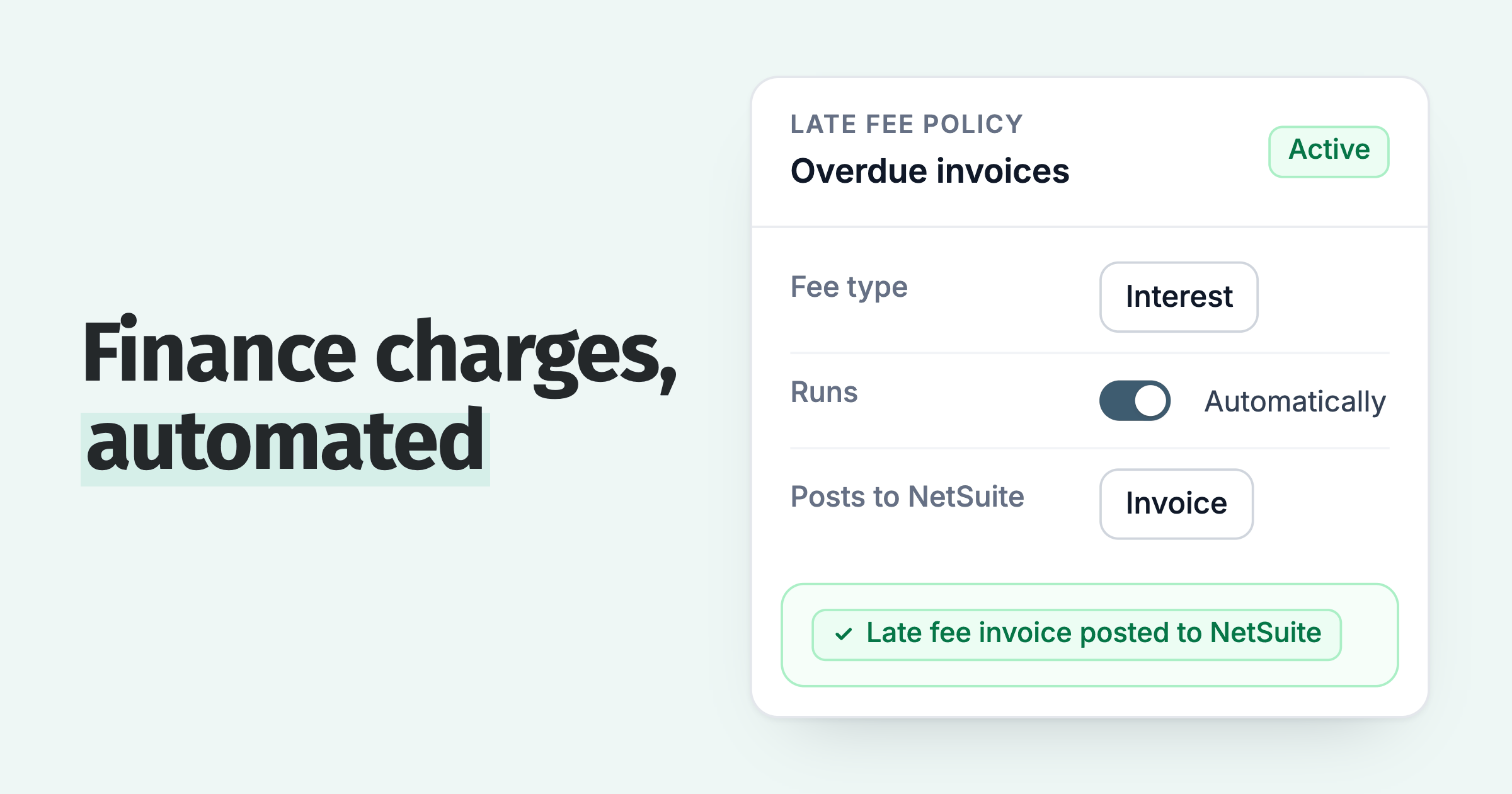
- Late fees and interest posted to the ledger, so the charge enters the customer's payables run.
- A customer payment portal with ACH, card and the invoice attached.
- Analytics and cash application: DSO, aging and remittance matching at volume.
What it is not: invoicing software creates the invoice, accounts payable software pays your suppliers, and a credit bureau rates a customer before you extend terms. Some tools here bundle one of those jobs. The category also goes by accounts receivable automation, credit control software and invoice chasing software.
How we ranked these accounts receivable software tools
Each tool is placed against the job it does best, using five criteria. All five are columns of the comparison table below. The weights add up to 100%.
- Ledger (25%): the accounting systems it connects to, because a tool that cannot reach your ledger is not a candidate. From each vendor's integration pages.
- Statutory late fees (25%): whether it posts late fees and interest to the ledger per customer group, with one set of late-fee rules, or not at all. From each vendor's help docs.
- Price from (20%): the lowest published monthly price in US dollars (Chaser in UK pounds), from each vendor's own pricing page.
- Size fit (15%): the revenue band or invoice volume the vendor's own tiers are built for.
- Reviews (15%): ratings with the review count, quoted as the table shows.
Prices come from each vendor's own pricing page, and a price a vendor hides is given as last published, with a note that current prices must be requested. Features come from vendor help docs. Prices change, so verify before you buy.
Ratings come from G2 and the Xero App Store: Paidnice and Chaser on the Xero App Store, Upflow and BILL on G2.
Every entry, Paidnice included, lists its limit. The weights are our editorial judgment.
Free: Payment reminder email templatesCopy the reminder emails for before, on and after the due date.What decides your shortlist?
Two questions settle which accounts receivable tools are relevant: how big your business is, and which accounting system holds the receivable.
How big are you? Size sets both the complexity you need and the price you can justify. A small business wants automation that works on day one at a price printed on the page. A larger company needs credit management, multi-entity billing, cash application and a procurement process to sign it off.
Which accounting system do you run? The software is a layer on top of your ledger, so the depth of that connection matters more than any feature checklist. Tools built for Xero and QuickBooks behave differently from platforms built for NetSuite, Sage Intacct or SAP. Statements are a good test: NetSuite's bulk run has no schedule, so a schedule means a workflow you build. On an ERP, IT will ask about roles and sign-in: NetSuite integration security and Business Central integration security.
A third question separates the finalists: does the tool enforce your terms, or only report on them? Reminder-and-dashboard tools tell you who pays late. Enforcement tools apply the late fee, issue the statement and hold the payment plan.
The 8 best accounts receivable software tools in 2026
Paidnice leads for Xero and QuickBooks businesses up to $50m a year, HighRadius for enterprise ERP stacks, Upflow for analytics-led mid-market teams, and Chaser for larger UK businesses that want bureau credit data.
1. Paidnice, best for Xero or QuickBooks

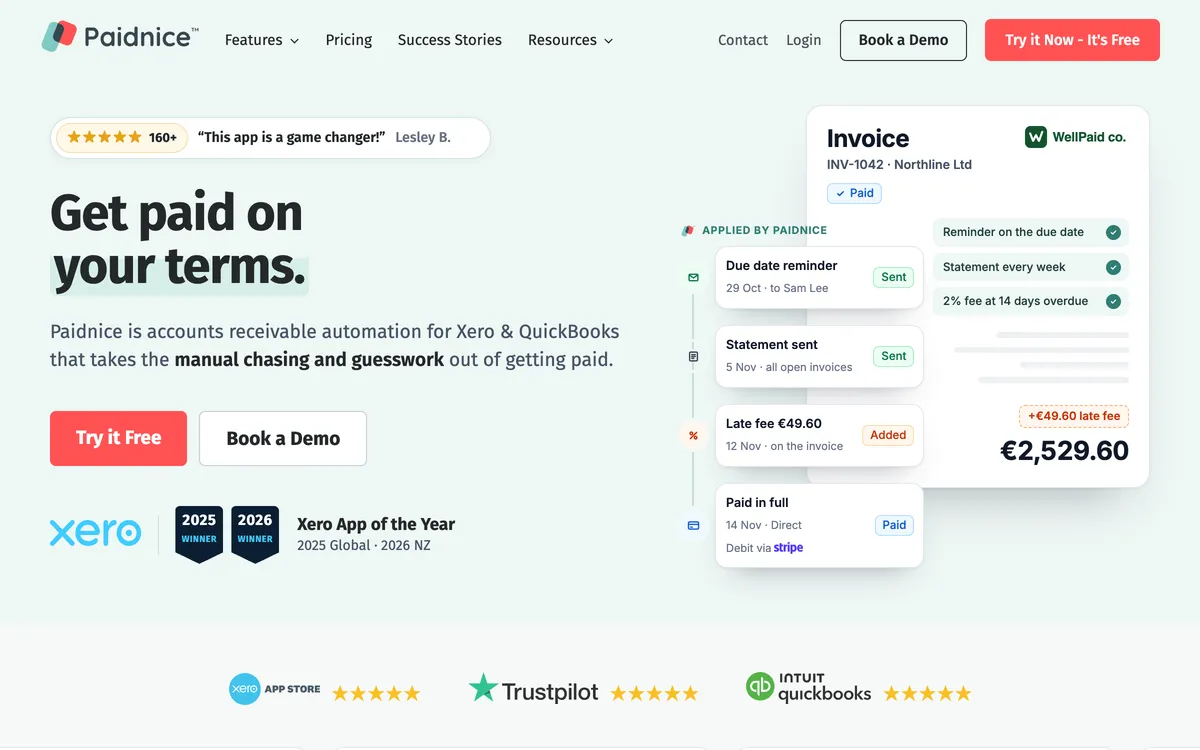
Paidnice is accounts receivable automation for Xero and QuickBooks Online, from US$69 a month, for any business up to $50m a year: reminders, late fees and interest, statements and escalation, with payment plans on Pro, priced by invoice volume.
- Fits
- any business from its first invoice up to $50m a year, or 50,000 invoices a year
- Regions
- UK, Australia, New Zealand, the US, Canada and South Africa
- Entry cost
- US$69/mo on Essentials, 150 invoices; Pro from US$99/mo; Custom from US$999/mo. No per-seat fees
- Rated
- 5.0 from 85 reviews on the Xero App Store; 4.9/5 on Capterra from 14 reviews
- Awards
- 2025 Xero Global Small Business App of the Year 🏆; winner, New Zealand Small Business App of the Year, Xero Global App Awards 2026; 2026 finalist for Innovation App of the Year and for Small Business App of the Year in the UK and US
- Runs on
- Xero, QuickBooks Online, Stripe, Pinch Payments, HubSpot, Pipedrive, Zapier; NetSuite, Sage Intacct and Dynamics 365 Business Central on the Custom plan. Newer ledgers such as Rillet, Campfire, Digits, DualEntry, Puzzle, Accounting Seed and Odoo are available on every plan through Paidnice's closed testing program
- Statutory late fees
- in the UK, auto-indexed to the Bank of England base rate; everywhere else, your own flat, percentage or compounding rates, per customer group
- The one thing it does best
- an invoice late fee and a statement interest charge on the same group, both posted to the ledger
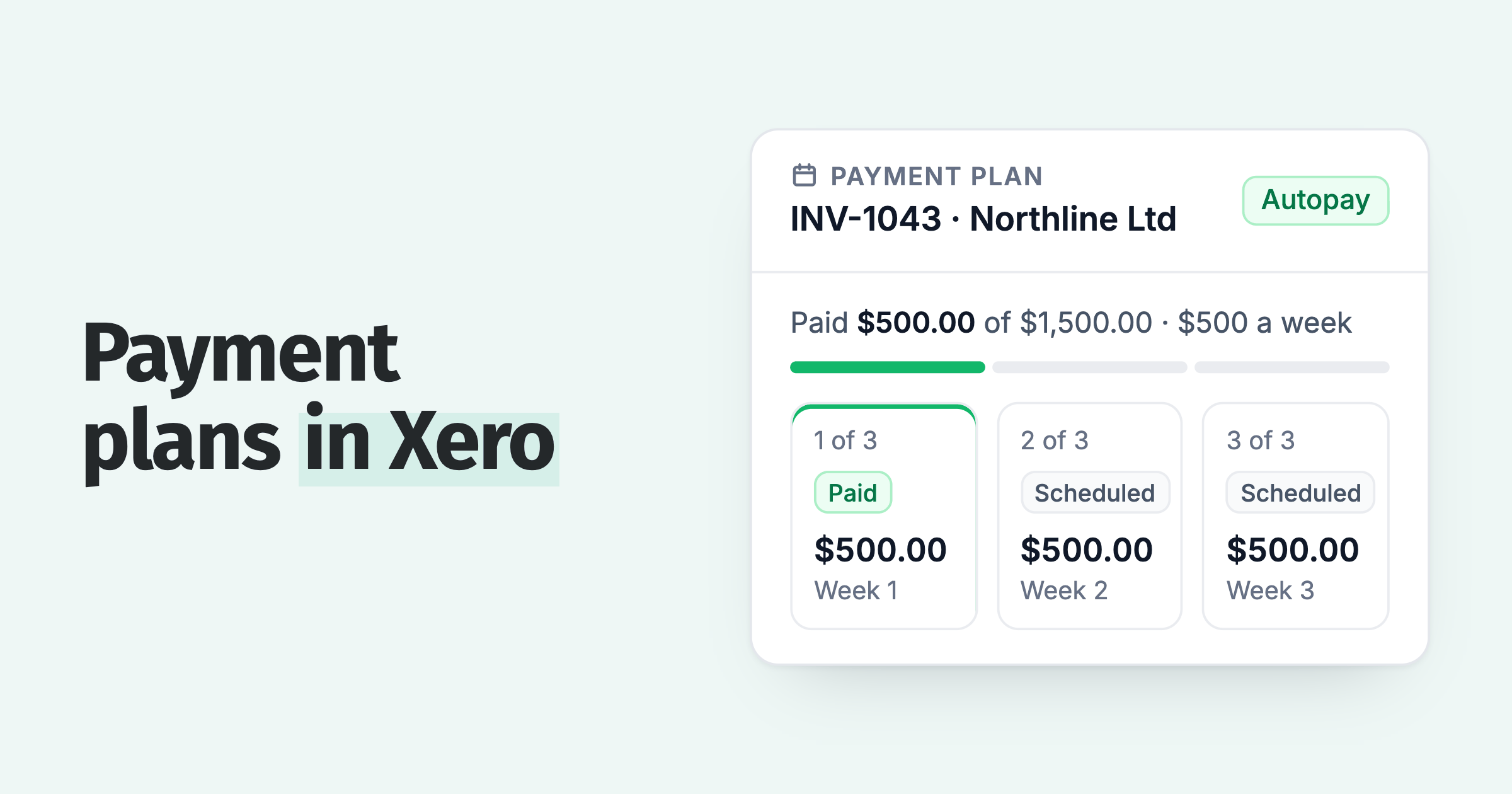
Reminders run per customer group, statements go on any schedule, and payment plans and sending from your own domain start on Pro. Reminders and statements alone are a full use case; late fees are optional. Customers see half as many late invoices in their first 30 days.
Best suited for: businesses up to $50m a year on Xero or QuickBooks Online that want the collections policy to run without a person driving it.
The limit: Paidnice matches payments through Xero and QuickBooks Online and Stripe, and bank-file matching is not documented; bureau credit checks run through Creditsafe on the Custom plan only. Native credit checks from payment behavior run on every plan.
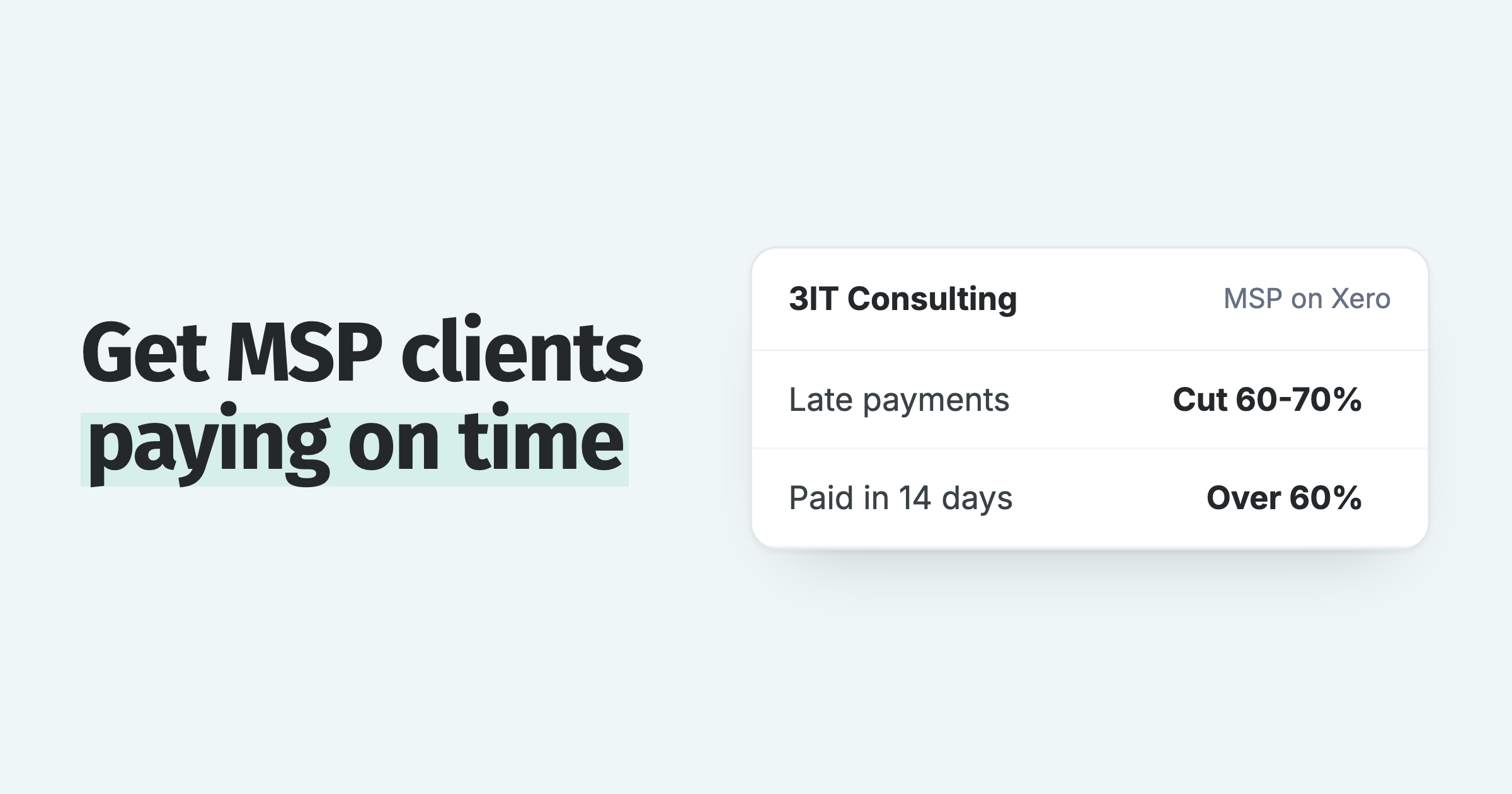
Three Paidnice customers, in their own numbers:
2. HighRadius, best for large enterprise B2B

HighRadius is an enterprise credit-to-cash platform, best for large B2B on SAP, Oracle or NetSuite, priced on request: AI credit, billing, cash application and collections at a volume no other tool on this list handles.

- Fits
- large B2B operations with a credit department and high invoice volume
- Regions
- global, with US and India delivery centers
- Entry cost
- not published; enterprise quote with an implementation project
- Rated
- 4.3/5 from 238 G2 reviews; 4.4/5 from 13 on Capterra
- Runs on
- SAP, Oracle, NetSuite and Business Central; Sage Intacct, QuickBooks Online and Xero too, HighRadius says
- Statutory late fees
- not verifiable from public materials
- The one thing it does best
- cash application and credit at volume, with the deepest AI automation claims in the category
HighRadius is the name enterprise finance teams recognize, covering credit, billing, collections, deductions and cash application in one suite. It fits a company where receivables is a department with its own headcount.
Customers named on HighRadius's website include Adobe, Unilever and Starbucks.
HighRadius also sells RadiusOne AR Suite for Sage Intacct, aimed at small to mid-market teams, quote only, with go-live under 4 weeks by its own figure.
Best suited for: enterprise B2B teams on SAP, Oracle or NetSuite that need credit and cash application at volume.
The limit: unpublished pricing and, for its main suite, an implementation that runs for several quarters, which is too heavy for a small or mid-market team.
3. Upflow, best for analytics-led finance teams

Upflow is a collections analytics platform, best for analytics-led mid-market finance teams, last published at US$440 a month for Grow and US$880 for Scale; current prices are hidden and must be requested from Upflow.

- Fits
- mid-market and upmarket B2B finance teams that manage by metric
- Regions
- New York headquarters, Paris origin, customers in 30-plus countries
- Entry cost
- last published at US$440/mo (Grow) and US$880/mo (Scale); current prices are hidden and must be requested from Upflow. Priced by gross invoice value, with unlimited seats
- Rated
- 4.8/5 from 233 G2 reviews
- Runs on
- NetSuite, Sage Intacct, Xero, QuickBooks, Stripe Billing, Chargebee, Zuora
- Statutory late fees
- none native; fees are applied in your ERP instead
- The one thing it does best
- collections analytics, with countback DSO, collection effectiveness and at-risk balances
Upflow reads your billing data and renders the sharpest dashboards here on collection performance, DSO and expected cash, plus AI promise-to-pay detection and a Cash Application Agent on Accelerate. Every tier is quote-only. Upflow offers a free Discover dashboard tier and a 14-day free trial on its Xero App Store listing; its pricing page lists no trial.
Customers named on Upflow's website include Vercel, Lattice and Front.
Best suited for: mid-market finance teams that run collections by metric and accept quote-only pricing.
The limit: no native late fees, no payment plans beyond customer-initiated part payments, and automatic actions fire once a day on business days only.
4. Chaser, best for larger UK businesses

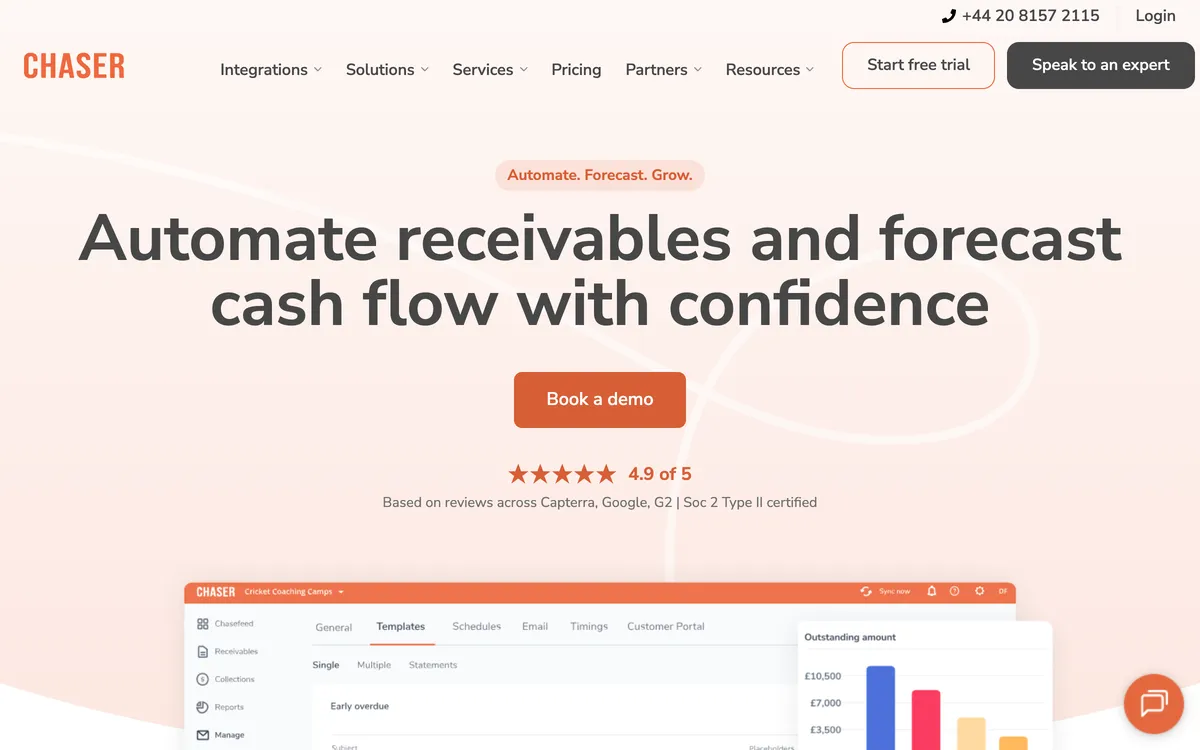
Chaser is UK credit control software, best for larger UK businesses past £4m that want bureau credit checks with chasing, from £599 a month: email and SMS reminders from your own mailbox.
- Fits
- UK-centered businesses with a named credit controller: Compact under £4m, Core from £4m, Complete to £100m revenue
- Regions
- UK-based; sells worldwide
- Entry cost
- £199/mo on Compact for revenue under £4m; above £4m a team is on Core from £599. Revenue-tiered
- Rated
- 4.98/5 from 374 Xero App Store reviews
- Runs on
- Xero, QuickBooks, Sage, NetSuite, Dynamics 365 Business Central, Gmail, Outlook
- Statutory late fees
- four calculation types including the Bank of England base rate, but one set of late-fee rules, across the account or for selected debtors, not tied to schedules; no documented way to run different rules per group
- The one thing it does best
- credit checking and monitoring in the same tool as email and SMS chasing
Chaser has been in the market since 2014 and sends reminders from your own Gmail or Outlook inbox, and adds payment plans, a payer portal and credit monitoring. It has the largest Xero App Store review base on this list. How its plans compare on due dates and installments is covered in accounts receivable software with payment plans. Our Chaser alternatives guide covers a switch in detail.
Customers named on Chaser's website include Pact Coffee, TaxAssist and The New Statesman.
Best suited for: UK businesses past £4m that want credit data and chasing in one tool.
The limit: one set of late-fee rules, not tied to schedules, statements monthly only on a fixed day, and entry plans capped at four users.
5. Quadient AR, best for mid-market ERP teams

Quadient AR, formerly YayPay, is the receivables module inside Quadient's suite, best for ERP teams from about $50m to $2b, priced on request: payment-date prediction and cash application; G2 reviewers report an average of about 3 months to go live.

- Fits
- B2B finance teams roughly between $50m and $2b on a major ERP
- Regions
- global, through Quadient's enterprise footprint
- Entry cost
- not published; Capterra lists from $500 per feature per month, and third-party estimates from PricingNow and itqlick, last seen, put implementation at US$5,000 to US$15,000, so request a quote
- Rated
- 4.4/5 from 156 G2 reviews; 4.5/5 from 33 on Capterra
- Runs on
- NetSuite, Sage Intacct, Sage 300 and X3, Dynamics, SAP, Acumatica, Xero, QuickBooks, Salesforce
- Statutory late fees
- no native module found in their help documentation
- The one thing it does best
- payment-date prediction, quoted at 83% to 94% accuracy, feeding a cash forecast
Quadient AR pairs a rules engine on customer and invoice events with credit applications, scorecards and a dispute module. The June 2026 AI cash dashboard puts payables and receivables in one working-capital view.
Best suited for: mid-market ERP teams where forecasting when cash lands matters more than enforcing terms.
The limit: quote-only pricing with a real implementation cost, one shared AR mailbox, and no portal option to split one invoice into installments without support.
6. Versapay, best for dispute-heavy B2B sellers

Versapay is a collaborative receivables platform, best for upper mid-market B2B in the US and Canada, priced on request: a shared portal where your customer and your collector settle queries in one place.

- Fits
- US and Canadian mid-market B2B sellers, strongest in manufacturing, wholesale and distribution
- Regions
- United States and Canada
- Entry cost
- not published; quoted by volume, seats and integrations
- Rated
- 4.1/5 from 101 G2 reviews; 4.4/5 from 30 on Capterra
- Runs on
- NetSuite, Sage Intacct, Dynamics; no Xero or QuickBooks connection
- Statutory late fees
- none found
- The one thing it does best
- the collaboration portal, where the buyer resolves the dispute inside the same system as your collector
Versapay pairs receivables workflow with its own B2B payment rails, which suits sellers whose disputes are about line items and deliveries rather than intent to pay. The buyer sees the invoice, the query and the payment in the same place, so a dispute does not stall in email.
Customers named on Versapay's website include Sharp, Carter Lumber and Würth Canada.
Best suited for: US and Canadian sellers on NetSuite, Sage Intacct or Dynamics whose late payments come from disputed line items.
The limit: no Xero or QuickBooks connection, no published pricing, and nothing on late fees, interest or payment plans in its public materials.
7. Invoiced, best for complex ERP billing

Invoiced is an invoice-to-cash platform owned by Flywire, best for complex or subscription billing on an ERP, priced on request: billing, dunning and payments on one system.

- Fits
- US mid-market and enterprise sellers with recurring or usage-based billing
- Regions
- United States, with Flywire's international payment reach
- Entry cost
- not published; by quote
- Rated
- 4.5/5 from 418 G2 reviews; 4.7/5 from 149 on Capterra
- Runs on
- NetSuite, Sage Intacct, Dynamics 365 Finance, Xero, QuickBooks Online and Desktop
- Statutory late fees
- a flat or percentage fee, a grace period, and schedules by customer group
- The one thing it does best
- billing and collections on one platform, so a complex invoice and its chasing stay on one record
Invoiced needs setup time and has depth once configured. Since the Flywire acquisition the positioning has moved upmarket, toward upper-mid-market and enterprise B2B finance teams, and the Xero and QuickBooks integrations show little recent development. A small business on those ledgers will find the setup effort hard to recover.
Customers named on Invoiced's website include WebPT, Apartment Life and AJ Tutoring.
Best suited for: sellers whose hard problem is the invoice itself, with recurring or usage-based billing on an ERP.
The limit: quote-only pricing, and the SMB ledger integrations look secondary to the ERP side.
8. BILL, best for payables and receivables

BILL is an accounts payable platform with receivables bundled in, best for US teams that want payables and receivables in one login, from US$49 per user a month plus transaction fees.
- Fits
- US small businesses whose main problem is paying bills, not collecting them
- Regions
- United States
- Entry cost
- US$49 per user/mo (Essentials); US$65 for two-way Xero or QuickBooks sync; plus transaction fees
- Rated
- 4.4/5 from 1,806 G2 reviews; 4.1/5 from 563 on Capterra
- Runs on
- CSV only on Essentials; two-way QuickBooks and Xero from Team; NetSuite, Intacct, Dynamics and Acumatica on Enterprise
- Statutory late fees
- none; no native fee or interest automation
- The one thing it does best
- payment rails inside the invoice workflow, with ACH, cards and auto-charge at scale
BILL is the default in many US accounting practices, and if payables is the main workload, the bundle makes sense. Judge it on the payables side, because that is where the investment goes.
BILL names Noom, KiwiCo and Quicken as customers on its website.
Best suited for: US small businesses that want to pay bills and send invoices from one seat.
The limit: receivables is capped at three company-wide reminder templates, with no late fees, no statements and no payment plans.
Side-by-side comparison of the eight accounts receivable tools
The columns are the four ranking criteria, plus the best-for line and the rating.
| Tool | Best for | Price from (monthly) | Size fit | Ledger | Statutory late fees | Rating |
|---|---|---|---|---|---|---|
| Paidnice | Xero and QuickBooks businesses that want reminders, statements and fees on one price | US$69 | Any size up to $50m a year, or 50,000 invoices a year | Xero, QuickBooks Online on every plan; newer ledgers such as Rillet, Campfire and Digits on every plan through closed testing; Sage Accounting and other ERPs on Custom | Yes, per customer group | 5.0 (84, Xero App Store) |
| HighRadius | Enterprise credit-to-cash | Not published | Large enterprise B2B | SAP, Oracle, NetSuite, Sage Intacct, QuickBooks Online, Xero | Not verifiable | 4.3 (238, G2) |
| Upflow | Analytics-led mid-market teams | Last reported US$440; now hidden, request a quote | Mid-market to enterprise | NetSuite, Sage Intacct, Xero, QuickBooks | No (via ERP only) | 4.8 (233, G2) |
| Chaser | Larger UK businesses that want bureau credit checks | £199 | Compact under £4m, Core from £4m, Complete to £100m | Xero, QuickBooks, Sage, NetSuite, Dynamics 365 Business Central | Yes, one set of rules, not tied to schedules | 4.98 (374, Xero App Store) |
| Quadient AR | ERP teams that want payment prediction | Not published | About $50m to $2b | NetSuite, Sage Intacct, Dynamics, SAP, Acumatica, Xero, QuickBooks | None found | 4.4 (156, G2) |
| Versapay | US and Canadian sellers with disputes | Not published | Upper mid-market B2B | NetSuite, Sage Intacct, Business Central | None found | 4.1 (101, G2) |
| Invoiced | Complex or subscription billing | Not published | Mid-market to enterprise | NetSuite, Sage Intacct, Dynamics 365 Finance, Xero, QuickBooks | Flat or %, grace period, schedules by customer group | 4.5 (418, G2) |
| BILL | Payables and receivables in one login | US$49 per user | US SMB (payables-led) | QuickBooks, Xero (Team+); NetSuite, Intacct (Enterprise) | No | 4.4 (1,806, G2) |
"Not published" means the vendor does not print a price.
Billtrust and Sage also appear in this search. Billtrust is an enterprise invoice-to-cash platform priced by quote, and Sage's receivables tools live inside Sage Accounting and Sage Intacct. Billtrust's pages name neither Xero nor QuickBooks Online, and Sage's tools sit inside its own products, so both sit with Versapay in the enterprise column.
Which accounts receivable software features change when customers pay?
Our analysis of invoice data from over 1,000 Paidnice customers shows how much each feature in the comparison table changes payment. Use the last column to test any tool on this list.
| Feature | What our data shows | What to check in a tool |
|---|---|---|
| Overdue reminders | On the day an overdue reminder goes out, about 12% of those invoices get paid. With no reminder, only about 4% do. | Reminders keep running after the due date, not only before it. |
| Several follow-up steps | An overdue invoice takes 2 to 3 follow-ups on average to get paid. 8 in 10 are paid by the fourth follow-up. | At least four steps after the due date. |
| Late fees applied by the software | 68% of businesses that start charging late fees get more invoices paid on time. For similar businesses that do not charge them, it is 52%. | The tool posts the fee to your ledger itself. |
| Fixed or percentage fee | About 8 in 10 fixed late fees get paid. Fewer than 6 in 10 percentage-based fees do. | A fixed fee option, not only a percentage rate. |
| Late fee collection | Customers who pay a late fee nearly always pay it with their other invoices: 9 in 10 on the same day. | The fee is an invoice line the customer pays with the invoice. |
| Reminders and late fees together | Businesses that run reminders and late fees together have a DSO of about 27 days, and invoices are paid about 3 days past the due date. With no automation switched on, DSO is about 39 days and invoices are paid about 14 days late. | Pick a tool that runs reminders and applies the late fee itself. |
How we measured this Original data
- Sales invoices followed by Paidnice from October 2024 to October 2026, in every market Paidnice serves. Payment is read 75 days after the due date.
- The late fee figure compares businesses that started charging fees with similar businesses that did not, over the same months.
- The reminder figures compare invoices on the same number of days overdue. Some invoices without a reminder are excluded from chasing on purpose, so read the reminder figure as a short-term response.
- The reminders and late fees row compares businesses by the automation they run. They differ in size, market and terms, so read it as a comparison.
- A few accounts with unusual volumes are excluded.
- Each figure is released with its full method: our reminder data, how many reminders it takes, our late fee data, fixed vs percentage fee data, when late fees get paid and how to reduce DSO, measured.
Which accounts receivable software fits your use case?
Your ledger removes more options than your budget, so start from the row that matches your business.
| Your situation | Start with | Why | Also consider |
|---|---|---|---|
| Under $5m on Xero or QuickBooks Online | Paidnice | US$69 entry, per-group automation, no credit controller needed | BILL, if payables is the real workload |
| $5m to $50m on Xero or QuickBooks Online | Paidnice | Per-group late fees, statements on any schedule, priced by invoice volume | Chaser, if built-in bureau credit checks are worth £599 a month on Core |
| UK business charging statutory interest | Paidnice | Auto-indexed to the Bank of England base rate per customer group (see late payment fees in the UK) | Chaser, one set of late-fee rules |
| $5m to $50m on NetSuite or Sage Intacct | Upflow | Analytics-led collections (see credit control software for ERPs) | Quadient AR, Versapay, Paidnice on Custom |
| $50m and up on SAP or Oracle | HighRadius | Full credit-to-cash at volume | Quadient AR, as the lighter option |
| Disputes with the buyer are the bottleneck | Versapay | Shared portal for buyer and collector | Quadient AR |
| Recurring or usage-based billing on an ERP | Invoiced | Billing engine and dunning on one platform | Upflow |
| US small business that mainly pays bills | BILL | Payables and receivables in one seat | Paidnice, once collections is the problem |
For a Xero-specific breakdown, see the 12 jobs and 6 apps for Xero. For the product itself, see the Paidnice accounts receivable platform for Xero and QuickBooks.
Which accounts receivable software is best for your revenue band?
Revenue band and ledger decide the shortlist: Paidnice or BILL under $5m on Xero or QuickBooks, Paidnice or Chaser from $5m to $50m, Upflow, Quadient AR or Versapay on NetSuite or Sage Intacct, and HighRadius above $50m.
- Under $5m on Xero or QuickBooks. Paidnice: the US$69 entry tier and per-group automation fit a business with no dedicated credit controller. BILL is the alternative only if payables, not collections, is the real workload.
- $5m to $50m on Xero or QuickBooks. The direct contest. Paidnice for per-group late fees, statements on any schedule and pricing by invoice volume; Chaser if built-in bureau credit checks justify £599 a month on Core. Paidnice handles up to $50m a year or 50,000 invoices a year.
- $5m to $50m on NetSuite or Sage Intacct. Upflow for analytics-led collections, Quadient AR if payment prediction and cash application matter more, Versapay if disputes are the bottleneck. Paidnice also connects to both on the Custom plan.
- $50m and up. HighRadius for full credit-to-cash at volume; Quadient AR and Versapay where collaboration comes first.
- Complex or subscription billing. Invoiced, because the billing engine and the dunning sit on the same platform.
- US businesses charging late fees. Paidnice and Chaser post the fee to the ledger; the ceiling is set by your state and your contract, covered in what US late fee law allows.
Reminder tools tell you who pays late. Enforcement tools make paying late cost something.
💡 Paidnice insight
The pattern we see from businesses up to $50m a year is consistent: one firm sequence for direct customers, disputed accounts excluded, statements on a fixed weekly or monthly cycle, and interest applied automatically then waived by a named person as a goodwill lever. Which tool you run matters less than making those four decisions once.
Which accounts receivable software is best for your accounting system?
Your ledger removes more options than your budget: Versapay has no Xero or QuickBooks path, and Paidnice reaches NetSuite and Sage Intacct on the Custom plan only.
- Xero. Paidnice was built for Xero first and was named the 2025 Xero Global Small Business App of the Year, with two-way sync and, in the UK, interest indexed to the Bank of England base rate. Chaser is the alternative when bureau credit checking matters most.
- QuickBooks Online. Paidnice layers on the fees, interest and statements QuickBooks does not automate, from US$69 a month. BILL is the choice only if you want payables in the same seat.
- NetSuite and Sage Intacct. Upflow, Quadient AR, Versapay and Invoiced all serve these ledgers, with HighRadius above them at enterprise volume. Paidnice connects on the Custom plan.
- SAP or Oracle. HighRadius, with Quadient AR as the lighter option.
What does US late fee law allow?
US late fee law sets no federal figure for a business-to-business invoice: the ceiling comes from your state and your contract.
Fourteen states set a maximum late fee and 35 set none. Our guide to late fee laws by state lists every figure with its citation. Where you charge interest rather than a flat fee, state usury law applies; the usury laws by state page covers the 50 states and DC.
Whatever the ceiling, the fee only creates leverage once it is posted as an invoice line in your ledger. A fee that exists only in an email never enters the customer's accounts payable, their aged payables report or their payment run.
Frequently asked questions
How much does accounts receivable software cost?
Published entry prices run from US$49 per user a month (BILL) and US$69 a month for 150 invoices (Paidnice) with Chaser Compact at £199 a month. HighRadius, Upflow, Quadient AR, Versapay and Invoiced quote against your revenue and volume. Compare the pricing metric as well as the number, because per-user and revenue-tiered models climb faster as you grow.
Which accounts receivable software is best for a small business?
On Xero or QuickBooks Online, Paidnice at US$69 a month if collections is the workload, or BILL at US$49 per user if payables is. On NetSuite or Sage Intacct, start with Upflow.
Do I still need accounts receivable software if my ledger already sends reminders?
Usually yes. Xero and QuickBooks send a basic reminder, but they do not apply late fees or interest, escalate by customer group or send statements automatically. The fee and the statement are what change payment behavior.
Is there free accounts receivable software?
Only up to a limit. Xero and QuickBooks include basic reminders at no extra cost. Paidnice’s first 20 actions are free, with no time limit. Upflow offers a free Discover dashboard tier and a 14-day free trial on its Xero App Store listing; its pricing page lists no trial. Chaser offers a free trial (10 days on the Xero listing) or a conversation with an expert.
What is the difference between accounts receivable software and accounting software?
Accounting software such as Xero or QuickBooks Online holds the ledger: it raises the invoice and records the payment. Accounts receivable software connects to that ledger and automates what happens while the invoice is unpaid, from reminders to late fees and payment plans. You keep the accounting software, and the accounts receivable tool sits on top of it.
What is the best software for accounts payable and receivable?
BILL is the only tool here that runs both from one seat, and it fits when payables is the heavier workload. If collections is the problem, a dedicated receivables tool does more, because BILL caps receivables at three reminder templates with no late fees, statements or payment plans.
Which accounts receivable tools apply late fees automatically?
Three of the eight. Paidnice applies an invoice late fee and a statement interest charge per customer group, Chaser applies one set of late-fee rules, and Invoiced documents late fees: flat or percentage, a grace period, and schedules by customer group. The rest expect you to raise interest manually; see our guide to compound interest on overdue invoices.
What is the most popular accounts receivable software?
No single tool leads every segment. HighRadius is the recognized name at enterprise volume, BILL is common in US accounting practices, and on the Xero App Store the deepest review bases belong to Chaser and Paidnice.
Read the transcript: 8 Best Accounts Receivable Software by Business Type in 2026
Welcome to our guide on the best accounts receivable software in 2026. We'll explore eight tools ranked by business type, focusing on your size and accounting system to determine the best fit. Choosing the best accounts receivable software depends on your business size and accounting system.
Small businesses prioritize simple automation and transparent pricing, while enterprises need advanced features like credit management. Integration with your accounting system such as Xero or QuickBooks is crucial for seamless operation. The recommendation matrix helps identify the best accounts receivable software based on business size and accounting system.
For small businesses using Xero or QuickBooks, Paidnice is recommended. Mid-market businesses also benefit from Paidnice, while Upflow suits those using NetSuite or Sage Intacct. Upmarket businesses should consider Upflow or HighRadius.
Let's examine eight tools at a glance. Paidnice is ideal for small and mid-market businesses using Xero or QuickBooks, priced at $69/month flat. Bill suits small businesses with a per-user model.
Chaser and Invoice Sherpa cater to mid-market needs. Upflow, VersaPay, Quadient Accounts Receivable, and HighRadius serve larger enterprises with varying pricing models. Reminders are universal across all software.
Key differences lie in enforcement, payments, and analytics. Paidnice offers multi-step reminders, automatic late fees, and interest. Bill provides basic features, while Upflow excels in accounts receivable analytics.
VersaPay and Quadient Accounts Receivable offer collaboration portals, with Quadient Accounts Receivable and HighRadius integrating artificial intelligence for advanced analytics and credit risk management. SMB tools like Paidnice, Chaser, Upflow, and Invoice publish prices, with Paidnice offering a flat $69/month for unlimited users. In contrast, mid-market and enterprise platforms like VersaPay, Quadient AR, and HighRadius provide quotes based on revenue and volume, often exceeding $100,000 annually.
Paidnice stands out as the most complete and cost-effective tool for Xero or QuickBooks users. For small businesses under $5 million revenue, automation that pays for itself is key. Paidnice offers a $69/month flat rate with unlimited users, handling late fees and statements.
Consider Bill for bundle invoicing and Chaser for reminder late chasing. Bill also supports various accounting systems beyond Xero and QuickBooks. In the mid-market segment with revenues between $5 million and $50 million, consistency, reporting, and automation are key.
Paidnice remains a top pick for Xero or QuickBooks users, offering automatic late fees and escalations. Consider Upflow for analytics and forecasting, VersaPay for business-to-business collaboration, or Quadient Accounts Receivable for rapid artificial intelligence-powered implementation. For upmarket and enterprise segments, Upflow becomes a function.
Upflow is our top pick for analytics-led receivables, ideal for NetSuite and Sage Intacct users. Consider HighRadius for high-volume business-to-business, VersaPay for collaboration-first collections, and Quadient Accounts Receivable for artificial intelligence-powered solutions without complexity. When choosing AR software by accounting system, integration depth is key.
For Xero, Paidnice is ideal, offering enforcement features. For QuickBooks Online, Paidnice adds automatic late fees. For NetSuite or Sage Intacct, consider Upflow, VersaPay, or Quadient Accounts Receivable, with HighRadius for large-scale operations.
Paidnice is ideal for small and mid-market businesses using Xero or QuickBooks. It offers a flat rate of $69 per month with unlimited users, rated 4.9/5 on Capterra and 5 stars on the Xero app store. It was awarded the 2025 Xero Global Small Business App of the Year.
Explore the full tool directory. Paidnice offers full automation for Bill integrates invoicing and accounts receivable and accounts payable for Chaser provides polished reminders at Invoiced handles complex billing for Tilled at $499/month. Upflow offers analytics-led accounts receivable from $440/month.
VersaPay and Quadient accounts receivable provide business-to-business portals and artificial intelligence solutions, respectively. HighRadius caters to high-volume enterprises. For businesses using Xero or QuickBooks with revenue under $50 million, choose Paidnice.
If you need analytics or use NetSuite/Sage Intacct, opt for Upflow. For upper mid-market business-to-business portals, consider VersaPay or Quadient accounts receivable. Large enterprises with high-volume order-to-cash should select HighRadius.
For bundled invoicing, accounts receivable, and accounts payable, choose Bill. For polished reminders, use Chaser. Stop searching for a single winner.
The ideal accounts receivable software aligns with your business size and accounting system. For small-to-mid-market businesses using Xero or QuickBooks, Paidnice is recommended. Explore Paidnice for free at paidnice.com and use the interactive selector for a comprehensive comparison
Paidnice features in this article
About the editorial team
Denym started Paidnice in 2022 after customers paying late left his own business short on payroll. He has led it to $1 billion collected on time across more than 1 million invoices, and writes about credit control, late fees and getting paid on Xero and QuickBooks.
Ashley is a co-founder and lead developer of Paidnice and has built accounting software for more than 10 years. He builds the ledger connections that put reminders, late fees and payments into Xero, QuickBooks and ERPs such as NetSuite and Business Central. Before Paidnice he co-founded A2X, ecommerce accounting software for Xero and QuickBooks.
 App of the Year
